Paid advertising can be one of the fastest ways to drive revenue for e-commerce brands. It can also be one of the fastest ways to burn through a budget with nothing to show for it. The difference between the two outcomes usually comes down to a handful of avoidable mistakes in campaign setup, targeting, and ongoing management.
Most PPC campaigns do not fail in dramatic, obvious ways. They fail quietly. Clicks come in, reports look acceptable on the surface, and weeks later, the numbers reveal that a significant portion of the budget went toward traffic that never converted. For e-commerce brands spending across Google, Meta, and Amazon, even small errors in structure or targeting compound quickly.
This blog covers the most common PPC mistakes ecommerce brands make in 2026, why they drain budget, and what a smarter paid ad strategy looks like. Whether you are running Google Shopping campaigns or cross-channel ads, these are the errors worth fixing first.
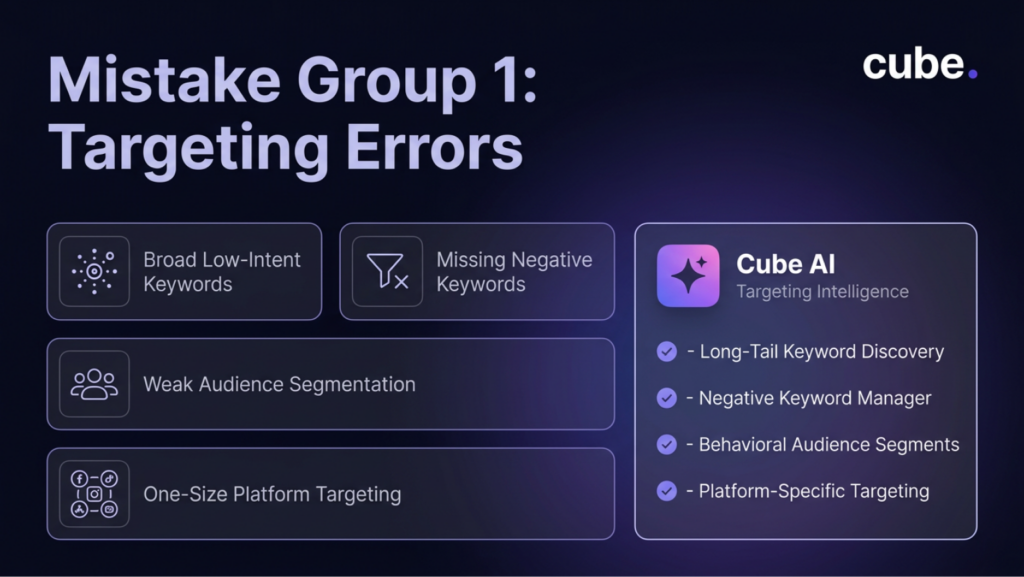
Targeting Broad, Low-Intent Keywords
Broad keywords seem to work. They have high search volume and appear to cover a wide audience. But in PPC for e-commerce, broad targeting usually means paying for people who are browsing, researching, or searching for something only loosely related to what you sell.
An e-commerce brand bidding on “running shoes” will show ads for queries like “how to clean running shoes” or “running shoes for flat feet exercises.” Neither carries purchase intent, and every click costs money.
The fix is to focus on long-tail keywords that signal buying intent. Use phrase match or exact match where possible, and review search term reports weekly. This single habit protects more budget than most other optimization tactics combined.
Neglecting Negative Keywords
Skipping negative keywords is one of the most expensive PPC mistakes and one of the least visible until you check. Without a negative keyword list, your ads appear for searches unrelated to your products. Terms like “free,” “jobs,” “DIY,” or “how to make” signal zero buying intent but still generate clicks that cost real money.
Many advertisers add negatives once during setup and never revisit them. Search behavior changes constantly, and new irrelevant terms surface regularly. Build shared negative keyword lists, review search term reports consistently, and add exclusions at both the ad group and campaign level. This is one of the simplest ways to reduce wasted ad spend without touching your creative or bidding strategy.
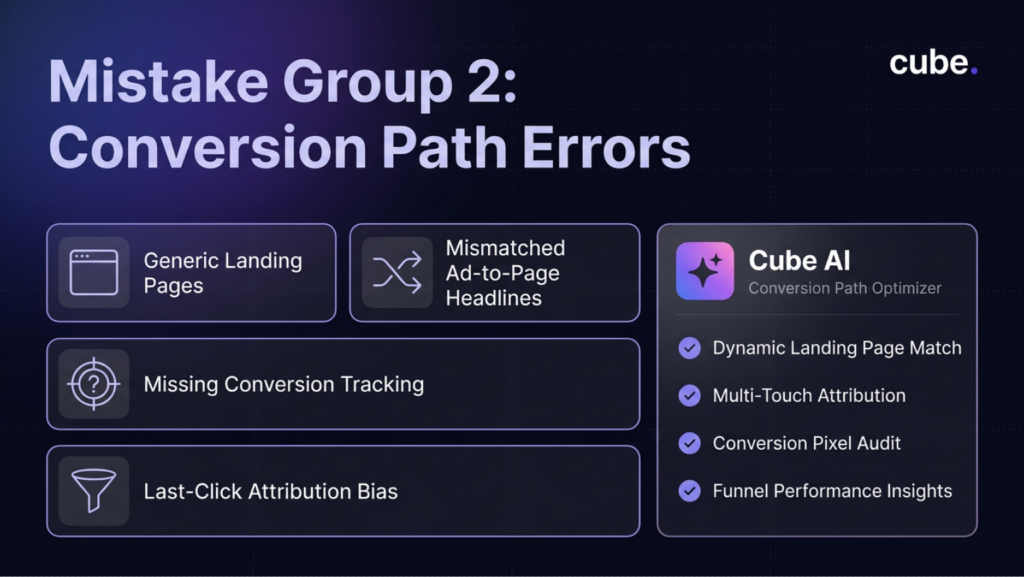
Sending Traffic to the Wrong Landing Pages
Getting the click is only half the job. If that click lands on a generic homepage or a category page that does not match the ad’s promise, the visitor leaves, and you have already paid for the traffic.
Every ad group should point to a dedicated landing page that matches the message, offer, and product shown in the ad. Align headlines between the ad and the landing page. Keep calls to action visible and simple. Test load speed on mobile, because slow pages lose conversions fast. Small improvements here often deliver better returns than increasing the budget on underperforming campaigns.
Ignoring Audience Segmentation
PPC for e-commerce is not just about keywords. It is about reaching the right people at the right stage of their buying journey. Running campaigns with overly broad demographic or interest targeting results in clicks from users who were never going to purchase.
Segment audiences by behavior, purchase history, and engagement level. A first-time visitor needs different messaging than a returning customer who abandoned their cart last week. Use remarketing lists to re-engage high-intent visitors, and layer demographic data to refine who sees your ads.
Platform-specific targeting matters too. Using the same product set across Google, Meta, and TikTok wastes budget because each platform attracts different user intent. Google Shopping captures high-intent searches. Meta drives discovery. Aligning creative and paid ad strategy to each platform’s strengths reduces waste and improves ROAS.
Relying on Platform Automation Without Oversight
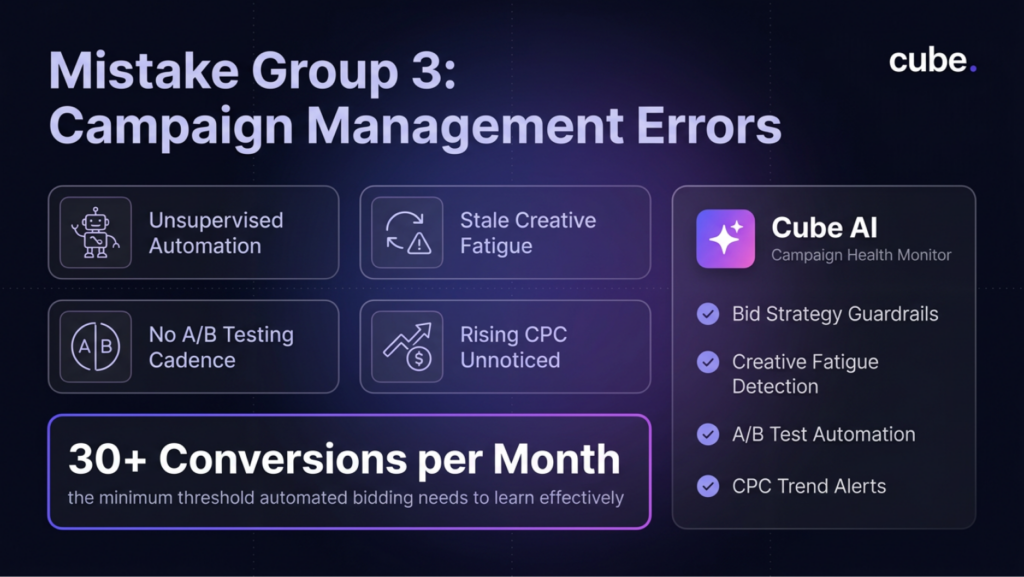
Automated bidding strategies from Google and Meta can improve performance when used correctly. But treating automation as a hands-off solution is where campaigns go wrong. Algorithms are designed to maximize platform revenue, not necessarily your profitability. Without guardrails, automated systems often find the cheapest clicks regardless of conversion quality.
Set specific conversion goals, define target ROAS thresholds, and monitor performance regularly. Automated bidding works best with sufficient conversion data to learn from, typically at least 30 conversions per month per campaign. Below that threshold, manual oversight and structured funnel approaches are more effective at protecting the budget.
Not Testing Creative and Letting Ads Go Stale
Ad fatigue is real. When the same audience sees the same creative repeatedly, click-through rates drop, costs per click rise, and conversion rates decline. Many e-commerce brands launch with a single set of creative assets and do not revisit them for weeks or months.
A/B test headlines, images, and calls to action continuously. Rotate creative on a regular cadence and track when performance metrics start trending downward. Identifying creative fatigue early prevents the budget from draining on ads that have stopped performing. Even small creative changes can reset engagement and extend campaign life.
Skipping Conversion Tracking
Running campaigns without proper conversion tracking is spending blindly. Without clear data on which campaigns, keywords, and ads drive actual purchases, every optimization decision becomes guesswork. Many e-commerce brands track clicks and impressions but fail to connect ad performance to revenue at the product level.
Set up conversion tracking before launching any campaign. Track purchases, add-to-cart events, and other key actions. Use multi-touch attribution to understand the full customer journey instead of relying on last-click data. The brands that consistently reduce CPC and improve ROAS are the ones measuring downstream revenue impact, not vanity metrics.
FAQs
What is a good ROAS benchmark for e-commerce PPC in 2026?
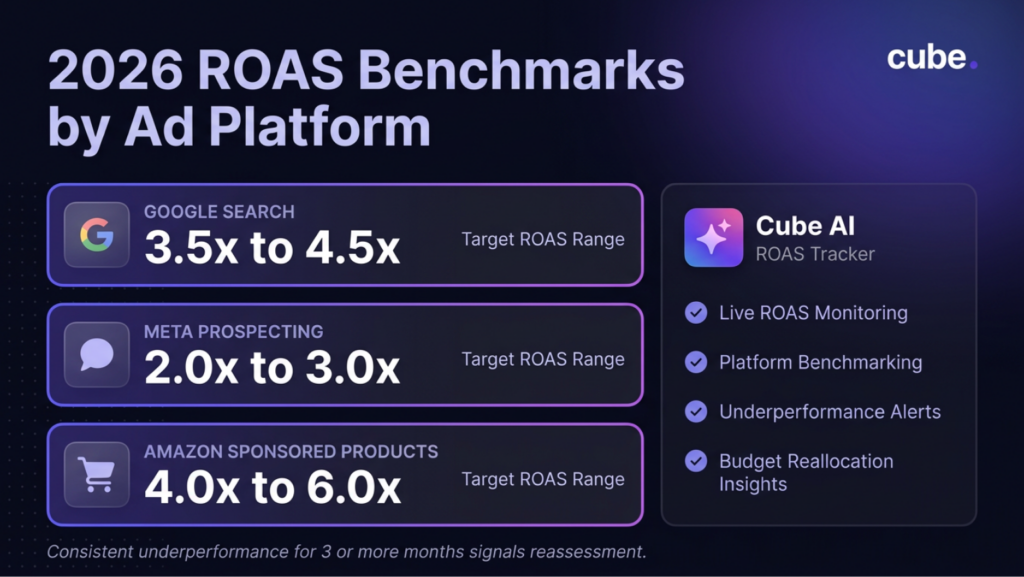
Benchmarks vary by platform: Google Search typically targets 3.5 to 4.5x, Meta prospecting 2.0 to 3.0x, and Amazon Sponsored Products 4.0 to 6.0x. Consistent underperformance for three or more months signals the need to reassess.
How often should I review search term reports?
Weekly. Search behavior shifts constantly, and new irrelevant queries appear regularly. Consistent reviews catch wasted spend early and keep negative keyword lists up to date.
How do I reduce CPC without losing traffic quality?
Focus on long-tail, high-intent keywords; improve Quality Scores by enhancing ad relevance and the landing page experience; and tighten audience targeting to reduce competition for broad terms.
Should I use automated or manual bidding?
Automated bidding works well when campaigns have enough conversion data for the algorithm to learn from. Below 30 conversions per month per campaign, manual or hybrid approaches are more effective at protecting the budget.
Stop Wasting Budget and Start Scaling with Cube
Every dollar of wasted ad spend is a dollar that could have driven revenue. The mistakes outlined above are common, but they are fixable with the right systems and consistent oversight.
Cube’s AI-powered paid marketing platform handles real-time bid optimization, audience targeting, creative testing, and cross-channel budget allocation while human strategists keep campaigns aligned with your growth goals.
If your paid ads are spending more than they should, book a demo with Cube and see how AI turns wasted spend into profitable performance.