
Blog
Listicle
Top 7 Audience Targeting Solutions for Paid Advertising

Wasted ad spend is rarely a creative problem. Most of the time, it is a targeting problem. When your paid advertising platforms push impressions to the wrong audiences, even the sharpest creative will not convert, and your cost-per-acquisition climbs fast.
Audience targeting in paid advertising defines who sees your ads, when they see them, and how your budget is allocated across the funnel. Getting this right is the difference between a campaign that scales and one that quietly drains your budget.
This guide ranks the seven most effective audience targeting solutions available today, from Google Ads to LinkedIn Ads Manager. Each platform is evaluated on precision, scale, funnel fit, and the types of businesses that extract the most value from it.
What is audience targeting in paid advertising?
Audience targeting in paid advertising is the process of defining who sees your ads based on signals like demographics, interests, in-market behavior, search intent, and customer data. Effective targeting ensures your budget reaches the highest-value users at each stage of the funnel. Platforms like Google Ads, Meta Ads Manager, and LinkedIn Ads Manager each use different data signals to define and reach those audiences.
Methodology: How We Ranked These 7 Targeting Solutions
Every platform on this list was evaluated against four criteria: audience precision (how granular and accurate the targeting options are), scale (total addressable reach), funnel fit (whether the platform excels at awareness, consideration, or conversion), and cost efficiency (what a realistic budget gets you in return).
We weighted precision and funnel fit most heavily because broad reach without accurate targeting is not a performance advantage. A platform with 500 million users but coarse segmentation will consistently underperform a smaller network with surgical demographic filters.
Platforms were ranked from strongest all-around performer to most specialized. The top spots go to platforms with the widest coverage across funnel stages. Niche or single-stage platforms appear lower in the list, not because they are weaker in their lane, but because they serve fewer use cases.
- Audience precision: granularity of demographic, behavioral, and intent-based filters
- Scale: total monthly active users and global ad reach
- Funnel fit: performance across awareness, consideration, and conversion stages
- Cost efficiency: realistic CPC, CPM, and minimum spend to see results
- Data integration: ability to use first-party data, lookalike audiences, and retargeting lists
1. Google Ads: Best All-Around Paid Advertising Platform
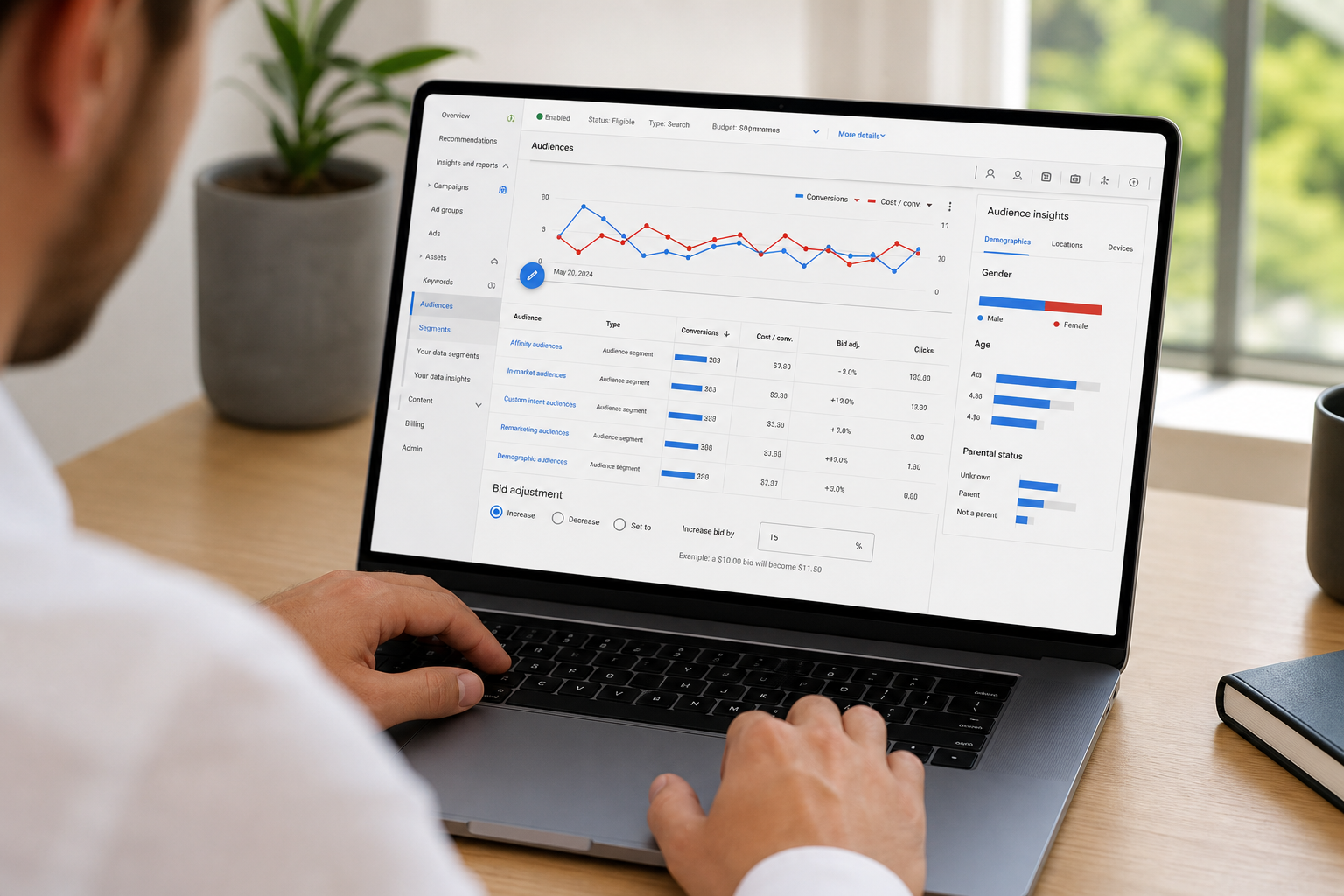
Google Ads earns the top spot because it combines the highest purchase-intent signals on the internet with an unmatched suite of targeting options. When someone types a query into Google, they are telling you exactly what they want, making search-based targeting the most reliable bottom-of-funnel tool available.
Beyond search, Google Ads Manager extends reach into YouTube, Gmail, and the Display Network, giving campaigns broad upper-funnel coverage from the same account. Features like Customer Match, In-Market Audiences, and Performance Max campaigns allow advertisers to layer intent data with behavioral signals for precise segmentation.
For multi-location brands in healthcare, home services, or F&B, local campaign targeting within Google Ads settings can serve ads to users within a defined radius combined with service category intent, a level of specificity few other platforms match.
- Search, Display, YouTube, Gmail, and Shopping inventory from one Google Ads Manager account
- In-Market and Affinity Audiences for behavioral layering across the funnel
- Customer Match allows first-party email list targeting and lookalike expansion
- Local targeting radius settings for multi-location and service-area businesses
- Smart Bidding algorithms optimize bids using real-time auction signals
- Google Ads transparency tools including the Google Ads library for competitive creative benchmarking
2. Meta Ads Manager: Best for Interest and Behavioral Targeting at Scale
Meta Ads Manager gives advertisers access to over 3 billion monthly active users across Facebook and Instagram, with the most detailed interest-based and behavioral targeting layer of any social media ads platform. The ability to define audiences by life events, purchase behavior, and hundreds of interest categories makes Meta the dominant choice for B2C brands running mid-to-upper funnel campaigns.
Instagram advertising targeting within Meta is particularly effective for visual product categories including retail, food and beverage, and hospitality. Ads served on Instagram Stories and Reels consistently deliver strong engagement rates among 18-to-44 demographics, and the Meta Ads Library allows advertisers to study competitor creative before launching their own campaigns.
Lookalike Audience modeling in Meta Ads Manager remains one of the most powerful audience expansion tools available. By uploading a high-value customer list, you can reach statistically similar users at scale, a function that is especially useful for franchise groups and multi-location operators scaling into new markets.
- Detailed targeting across interests, behaviors, demographics, and life events
- Instagram advertising targeting via Reels, Stories, and Feed placements
- Lookalike Audiences built from first-party customer or lead lists
- Retargeting via Meta Pixel and Conversions API for bottom-of-funnel recovery
- Ads Library Meta access for competitive creative research
- Advantage+ Shopping Campaigns for automated product catalog targeting
3. LinkedIn Ads Manager: Best for B2B Audience Precision
No platform matches LinkedIn Ads Manager for B2B audience precision. With targeting filters spanning job title, seniority, company size, industry, and member skills across more than 900 million professionals, LinkedIn allows B2B advertisers to reach decision-makers by role rather than by proxy.
Sponsored Content, Message Ads, and Lead Gen Forms work particularly well for marketing directors and CMOs selling to enterprise buyers. The platform is the strongest option when the deal value justifies a higher CPC, since the audience quality more than offsets the volume disadvantage relative to Meta or Google.
Account-Based Marketing functionality lets advertisers upload a named list of target companies and serve ads exclusively to users at those organizations. For agencies and platforms selling to specific verticals, this level of B2B targeting specificity is unmatched by any other paid advertising platform.
- Job title, seniority, company name, and industry filters for surgical B2B targeting
- Account-Based Marketing via matched company list uploads
- Lead Gen Forms natively capture leads without requiring a landing page click
- Sponsored InMail delivers direct message-style ads to professional inboxes
- Audience expansion tools to scale reach beyond exact-match segments
- Average CPC ranges from $5 to $15, justified by decision-maker audience quality
4. Google Display Network: Best for Retargeting and Awareness at Scale
The Google Display Network (GDN) reaches over 90% of global internet users across more than 2 million websites and apps, making it the largest programmatic display environment accessible through a single platform. For retargeting campaigns, GDN is the most cost-efficient way to stay in front of users who have already visited your site.
Custom Intent Audiences let advertisers target users based on specific search queries they have recently entered, bridging the gap between search intent and display reach. Combined with frequency capping and topic-based placements, this makes GDN effective for sustained consideration-stage campaigns.
The network pairs naturally with Google Ads Manager, allowing brands to run search and display campaigns from the same account, share audience lists, and attribute conversions across both channels without additional tooling.
- Reaches 90%+ of global internet users across 2 million+ sites and apps
- Remarketing Lists for Search Ads connects display behavior to search bidding
- Custom Intent Audiences built on recent search query activity
- Responsive Display Ads auto-generate creative combinations for performance testing
- Topic and placement targeting for context-relevant ad placements
- Shared audience lists with Google Search campaigns for unified attribution
5. Snapchat Ads Manager: Best for Gen Z and Young Millennial Reach
Snapchat Ads Manager is the most effective paid advertising platform for reaching 13-to-34-year-old audiences in North America, with over 375 million daily active users. For brands in retail, food and beverage, or entertainment targeting younger demographics, Snapchat offers CPMs considerably lower than Meta for equivalent age segments.
Snap Audience Match allows advertisers to upload customer lists for direct targeting and lookalike modeling, while Snap Pixel enables full-funnel retargeting from site visits through purchase. The platform's lens and filter ad formats drive high engagement rates through interactive, camera-native experiences.
Snapchat's targeting is less granular than Meta or Google for interest-based segmentation, but its demographic precision for younger cohorts and relatively low minimum spend make it a strong supplemental channel for brands already running core campaigns elsewhere.
- 375 million+ daily active users with strong 13-to-34 demographic concentration
- Snap Audience Match for first-party data targeting and lookalike modeling
- Snap Pixel for full-funnel event tracking and retargeting
- Lens, filter, and Snap Ad formats designed for camera-native engagement
- Lower average CPMs than Meta for equivalent age-demographic segments
- Lifestyle and interest category targeting across entertainment, fashion, and food
6. Programmatic DSPs: Best for Cross-Channel Account Targeting
For enterprise advertisers running sophisticated multi-channel programs, programmatic Demand-Side Platforms (DSPs) like The Trade Desk and DV360 offer a level of cross-channel audience orchestration that individual publisher platforms cannot replicate. DSPs allow advertisers to activate audience segments across display, video, and connected TV inventory from a single buying interface.
Combined with the LinkedIn Insight Tag, DSPs can serve display ads to users who visited your pricing page and work at companies with 500 or more employees. This combination of professional identity data and programmatic reach is uniquely powerful for B2B advertisers with deal values that justify the added complexity.
This approach is best suited for teams with in-house media buyers or managed service partners who can operate DSP infrastructure. It is not a self-service solution for most small or mid-size businesses.
- Activates audience data across display, video, and connected TV channels
- Cross-device targeting links user behavior across desktop, mobile, and streaming
- Private Marketplace deals with premium publishers for brand-safe placements
- Frequency and sequencing controls for multi-touch campaign narratives
- Advanced attribution models connect impression exposure to pipeline and revenue
- LinkedIn Insight Tag integration enables professional attribute retargeting across external inventory
7. Telegram Ads Platform: Best for Niche Community Reach
The Telegram Ads Platform is the most specialized entry on this list. It serves sponsored messages within public Telegram channels with over 1,000 subscribers, targeting by channel topic and language rather than individual user demographics. For brands in crypto, fintech, or technology with high Telegram user penetration, this channel offers access to highly engaged niche communities.
Telegram's targeting model does not use behavioral cookies or personal data, which means it sidesteps privacy restrictions that increasingly constrain Meta and Google. This makes it an option for advertisers who need to reach privacy-conscious or regulation-constrained audiences.
The high minimum spend threshold limits accessibility to enterprise or well-funded advertisers. It ranks last not because of audience quality in its lane, but because of its narrower applicability across most business types.
- Sponsored messages appear natively inside high-traffic public Telegram channels
- Targeting by channel topic, language, and geographic region
- No personal data collection, making it suitable for privacy-first campaign contexts
- Strong reach in crypto, fintech, tech, and select international markets
- High minimum spend threshold limits accessibility to enterprise advertisers
- No retargeting or lookalike capabilities compared to Meta or Google
| Platform | Best For | Targeting Precision | Avg. CPC Range | Funnel Stage Fit |
|---|---|---|---|---|
| Google Ads | All-around intent-based targeting | Very High | $1 to $6 | Bottom and full funnel |
| Meta Ads Manager | Interest and behavioral B2C targeting | Very High | $0.50 to $3 | Top to mid funnel |
| LinkedIn Ads Manager | B2B professional audience targeting | High (professional) | $5 to $15 | Mid to bottom funnel |
| Google Display Network | Retargeting and awareness at scale | Medium to High | $0.30 to $1.50 | Top to mid funnel |
| Snapchat Ads Manager | Gen Z and young millennial reach | Medium | $0.50 to $2 | Top of funnel |
| Programmatic DSPs | Cross-channel B2B account targeting | High (cross-channel) | $2 to $10 CPM-based | Full funnel enterprise |
| Telegram Ads Platform | Niche community and international reach | Low to Medium | Variable by region | Top of funnel only |
Frequently Asked Questions
-
What is the best paid advertising platform for audience targeting?
Google Ads is the strongest all-around paid advertising platform because it combines search intent signals with demographic and behavioral layering. For social media ads, Meta Ads Manager offers the most granular interest-based segmentation. The right choice depends on your audience profile, funnel stage, and budget. Most multi-location brands benefit from running both platforms in parallel for full-funnel coverage. -
How do I define targeting in marketing for paid ads?
Targeting in marketing means selecting the specific audience segments that will see your ads based on factors like demographics, interests, in-market behavior, search intent, and customer data. Effective targeting ensures your budget reaches users most likely to convert. Platforms like Google Ads and Meta Ads Manager each use different data signals to build and refine those audience definitions over time. -
Which targeting option is best for achieving brand awareness?
For brand awareness, broad reach targeting using Affinity Audiences on Google Display or interest-based targeting on Meta Ads Manager tends to perform best. These options deliver impressions to large, relevant audiences at lower CPMs than search. Instagram advertising targeting via Reels placements also drives strong awareness engagement among younger demographics in retail, food, and hospitality categories. -
What is the difference between Google Ads Manager and Meta Ads Manager?
Google Ads Manager captures users based on active search intent, making it stronger for bottom-of-funnel conversion campaigns. Meta Ads Manager targets users based on interests, behaviors, and social graph data, making it more effective for awareness and consideration. Many advertisers run both simultaneously, using Google for demand capture and Meta for demand generation across social media marketing services. -
How does Instagram advertising targeting work?
Instagram advertising targeting operates through Meta Ads Manager and uses the same audience data as Facebook. Advertisers can target by age, location, interests, behaviors, and custom audiences built from customer lists or website visitors. Placements include Feed, Stories, Reels, and Explore. Instagram targeting is particularly effective for visual product categories and reaches 18-to-34 demographics at competitive CPMs within broader social media marketing services. -
What is the Meta Ads Library and how is it useful?
The Meta Ads Library is a public database of all active ads running across Facebook and Instagram. Advertisers use it to research competitor creative, messaging strategies, and offer structures before launching their own campaigns. Accessing the ads library Meta provides requires no login and is free to search globally, making it a practical tool for informing paid advertising strategy and benchmarking against competing internet marketing services. -
What are the best digital marketing services for managing paid ads across platforms?
The best digital marketing services for multi-platform paid ad management combine cross-channel audience targeting, real-time bid optimization, and unified attribution reporting. Managed services outperform DIY tools for multi-location brands because they reconcile the different data models across Google, Meta, and LinkedIn. Providers should report on CAC and ROAS rather than impressions to prove measurable ROI from lead generation services. -
How does LinkedIn Ads Manager compare to other paid advertising platforms for B2B targeting?
LinkedIn Ads Manager is the strongest platform for B2B audience targeting because it filters by job title, company size, seniority, and industry across 900 million professionals. No other platform matches this professional-attribute precision. Average CPCs of $5 to $15 require larger budgets to generate statistically valid results, but for high deal-value B2B products the audience quality consistently justifies the premium over general social media ads platforms.