Your ad was working. Leads were coming in, your cost per lead looked good, and everything seemed to be moving in the right direction.
Then, a few weeks later, results started slipping. Fewer people clicked. Leads became more expensive. But you had not changed the audience, budget, or offer.
The problem could be creative fatigue.
It happens when people see the same ad so often they stop paying attention. The decline can be gradual, which means you may keep spending before realizing the creative is no longer doing its job.
In this guide, we’ll look at the early signs of creative fatigue, how to measure it, and what you can do before it starts eating into your ad budget.
What Is Creative Fatigue and Why Does It Cost You?
Creative fatigue sets in when people see the same ad often enough that it stops getting their attention.
They may have noticed it the first few times. Eventually, they simply scroll past.
Ad creative fatigue can happen across platforms, including Facebook, Instagram, and YouTube.
As engagement and clicks decline, your campaign can become less efficient. You may start paying more to generate the same level of traffic or leads.
Small local audiences can reach this point quickly, especially when you run Meta Ads for local lead generation and repeatedly reach people within a limited service area.
Take a restaurant promoting weekend brunch to people within five miles. That audience may only contain a few thousand relevant people. After several weekends, many of the same users have already seen the ad multiple times. The creative that initially caught their attention can start blending into the feed.
Early Warning Signs Your Ads Are Wearing Out
Rising Frequency
Frequency tells you, on average, how many times each person has seen your ad.
If frequency keeps climbing while results weaken, you may be showing the same creative to the same people too often.
Many paid social teams start paying closer attention when weekly frequency reaches around 3 to 4. But no single number applies to every campaign. Audience size, budget, platform, and buying cycle all matter.
Meta may also surface creative fatigue insights when repeated exposure begins affecting performance.
Falling Click-Through Rate and Engagement
New ads often get stronger engagement early because the creative is still fresh.
If your click-through rate (CTR) starts falling consistently while frequency increases, creative fatigue may be setting in.
On social platforms, look beyond clicks too.
Fewer reactions, shares, comments, or video interactions can also signal that people are becoming less interested in the ad.
Climbing CPC, CPM, and Cost per Lead
Watch your costs at the same time.
If cost per click (CPC), cost per thousand impressions (CPM), or cost per lead keeps rising while the campaign itself has not changed much, your creative may be losing effectiveness.
Check conversion rate as well. If you are still getting traffic but fewer people are converting, look at both the creative and the landing experience before deciding what is causing the drop.
How to Measure Creative Fatigue Without Guesswork
Measuring creative fatigue starts with knowing what normal performance looks like.
Record each ad’s CTR, CPC, frequency, conversion rate, and cost per lead during its first one to two weeks. That gives you a baseline to compare against later.
More importantly, track each creative separately.
Campaign-level averages can hide problems. One new ad may perform well enough to make the overall campaign look healthy while another creative steadily declines.
You can also set simple alert thresholds, such as:
- CTR drops 20% or more below its baseline
- Cost per lead increases 25% or more
- Frequency moves beyond the range you have set for the campaign
Treat these as warning points, not universal rules. Your normal range will depend on your audience, budget, platform, and campaign type.
Is It Creative Fatigue or Something Else?
Not every performance drop is caused by creative fatigue.
An ad that struggled from the beginning probably has a creative, offer, audience, or targeting problem. Fatigue usually describes an ad that performed well first and then gradually declined.
Seasonality matters too.
A beach hotel may naturally see lower demand after summer. A dental practice may see fewer bookings around certain holidays. Compare results with previous periods or the same time last year when useful data is available.
Technical problems can also look like fatigue.
Before replacing an ad, check that your contact form works, your offer is still active, and your tracking records conversions correctly.
You can also run a simple test. Show the same audience a fresh creative under similar campaign conditions. If performance improves, that is a strong sign the previous creative had started wearing out.
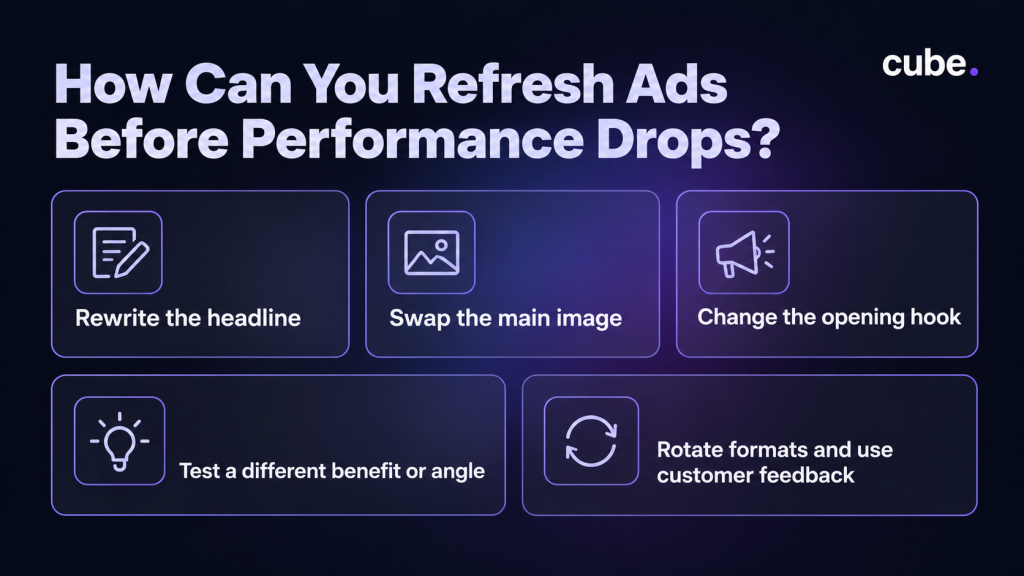
How You Can Refresh Ads Before Performance Drops
You do not always need a completely new campaign.
Start with smaller changes.
- Rewrite the headline.
- Swap the main image.
- Change the opening hook.
- Test a different benefit or angle.
You can also rotate formats. Turn a static image into a short video. A single-image restaurant ad could become a carousel showing several dishes. A hotel could rotate between room photos, guest experiences, and amenities.
Meta also recommends continuously testing different images and videos, noting that frequent creative testing can help combat creative fatigue caused by repeated exposure.
Your customers can also give you new creative ideas.
Positive reviews, recurring questions, and real customer feedback can reveal what people value most. With permission where needed, those insights can inspire new hooks, visuals, and messaging.
Finally, build creative refreshes around your audience size and spend.
Frequently Asked Questions
What is creative fatigue in advertising?
It is the drop in audience response that can happen when people see the same ad too many times.
How do you know if your ads have creative fatigue?
Look for rising frequency alongside falling CTR, weaker engagement, and higher costs per click or lead.
How often should you refresh ad creatives?
It depends on your budget, audience size, frequency, and how performance changes over time.
What ad frequency usually signals fatigue?
A weekly frequency of around 3 to 4 is worth watching, but the right threshold varies by campaign.
Is creative fatigue the same as audience saturation?
No. Creative fatigue means people are tiring of the ad, while audience saturation means you have already reached most of the available audience.
Can creative fatigue detection be automated?
Yes. Platform alerts and AI tools can help flag changes such as falling CTR, rising frequency, or increasing costs.
Keep Your Ad Performance From Slipping
Creative fatigue is easier to manage when you catch the warning signs early. Regularly tracking frequency, CTR, cost per lead, and engagement helps you spot when an ad starts to lose attention, so you can refresh the creative before you waste too much budget.
A strong paid advertising strategy goes beyond launching ads and waiting for results.
Cube’s paid marketing solution combines ongoing campaign monitoring, creative optimization, and AI-powered insights to help businesses spot performance changes early and keep ad spend working efficiently.