


Paid ads can help you reach potential customers quickly. Organic SEO takes more time, but it can keep bringing people to your website long after a campaign ends.
Many businesses manage the two channels separately. Paid campaigns may show which keywords and offers convert, while SEO is working from different assumptions.
A better approach is to let PPC and SEO share data and goals. Paid ads give you fast feedback. SEO can turn those insights into long-term search visibility.
In this article, we’ll look at how to connect paid ads with an organic SEO strategy so you can generate leads now while building sustainable growth.
Paid Ads and SEO Should Support the Same Goal
Paid ads and SEO work at different speeds, but they should move your business in the same direction.
Google Ads can help you appear for high-intent searches quickly. Meta Ads can reach people who may not be actively searching yet. SEO builds visibility through useful content and a website that search engines and AI platforms can understand.
As we explain in how AI is changing SEO in 2026, search visibility now goes beyond rankings and includes AI-powered search experiences.
Use paid media for speed and testing, then use SEO to build on what is already working.
Use Paid Search Data to Guide Your Organic SEO Strategy
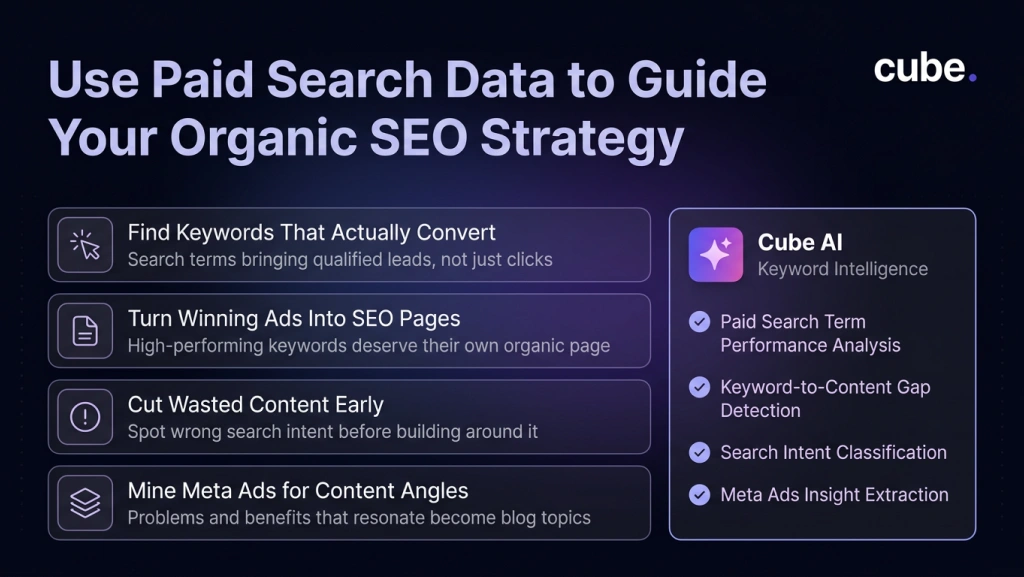
Paid search can quickly show you what your audience responds to.
Look at the search terms that bring in qualified leads, the ads people click, and the landing pages that convert. If a service keyword performs well in Google Ads, it may deserve its own SEO page or supporting content.
A keyword may attract clicks but few inquiries. Knowing that early can stop you from building content around the wrong search intent.
Meta Ads can also show which problems or benefits get the strongest response. Those insights can shape future service pages, FAQs, and blog topics.
Cube’s guide to Meta Ads for local lead generation shows how focused campaigns can help service businesses reach the right local audience.
Let SEO Strengthen Your Paid Campaigns
Paid ads can bring someone to your website, but the page still has to earn their trust.
Clear page structure, useful information, fast load times, and relevant calls to action improve the experience for both paid and organic visitors.
SEO content also helps when someone does not convert right away. A person may see your ad, search for your brand later, read a guide, check reviews, and then get in touch.
That is why digital marketing growth should not be judged one channel at a time. Paid media may introduce your business, while organic search helps build trust.
One useful search engine optimization tip is simple: optimize for the full customer journey, not only the first click.
Use AI to Connect Paid and Organic Decisions
When you manage several campaigns, pages, and keywords, useful signals can be easy to miss.
AI-powered marketing can help teams spot patterns faster. A paid campaign may uncover a service that converts well. Your SEO team can then build more organic visibility around that topic. Organic search data may also reveal themes worth testing through paid ads.
Cube’s approach combines AI-powered execution with human strategy, so automation can support ongoing analysis while people keep the work aligned with business goals.
Measure Growth Across the Full Search Journey
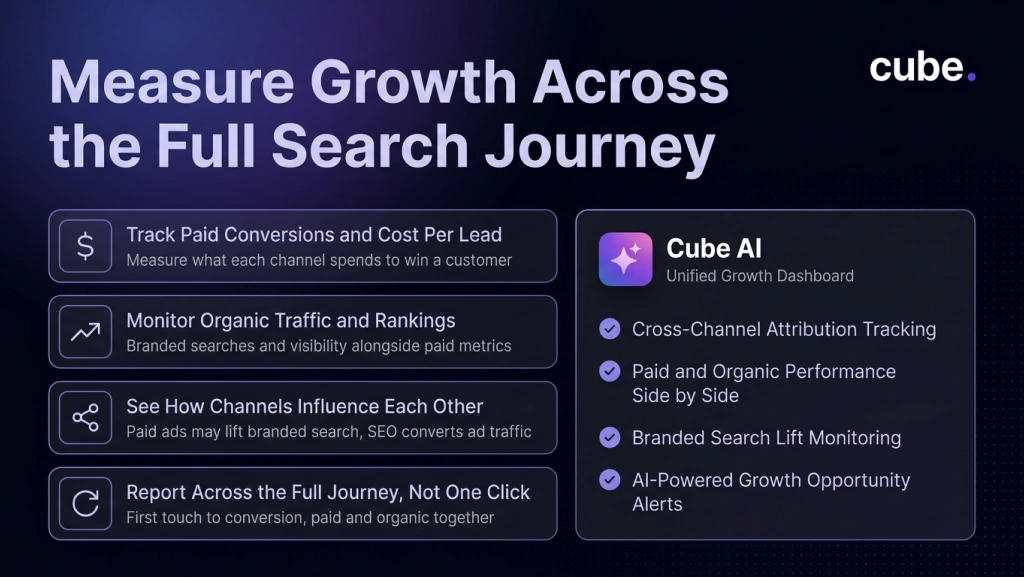
If PPC and SEO are working together, your reporting should reflect that.
Track paid conversions and cost per lead alongside organic traffic, rankings, branded searches, and search visibility. Then look at how the channels influence each other.
Stronger paid campaigns may lead to more branded searches. Helpful SEO content may convert people who first discovered you through an ad.
FAQs
Can paid ads improve SEO rankings?
Not directly, but paid campaign data can help you make better keyword and content decisions.
Can PPC data help with SEO keyword research?
Yes. Search terms and conversion data can show which keywords bring in valuable traffic.
Does SEO reduce the need for paid ads?
It can reduce reliance on paid traffic over time, while paid ads remain useful for faster reach.
Should PPC and SEO target the same keywords?
Sometimes. High-value terms can support both channels when they match the right search intent.
How often should paid and SEO teams share data?
Regularly. A monthly review can help both teams spot opportunities and avoid duplicated work.
Paid and Organic Marketing Work Better Together
Paid ads can help you reach potential customers quickly, while SEO helps you keep building visibility over time. When both channels share the same data and goals, you can learn what works faster and make better decisions about where to invest next.
If you want your paid campaigns to support stronger long-term visibility, take a look at Cube’s AI-powered SEO solution. It shows how Cube connects SEO execution with a broader strategy for sustainable digital growth.


