


A customer leaves a review while you are managing your team, helping another customer, or simply trying to get through the day. You plan to respond later. Then another review comes in, and it keeps piling up.
That is where review management becomes difficult. Most businesses do not have time to keep checking Google, Yelp, TripAdvisor, Facebook, and other platforms throughout the day.
The solution is to create a review response strategy that makes the process faster and easier to manage. In this blog, we’ll share practical review management tips to help you respond faster without letting reviews become another full-time task.
Why Fast Review Responses Are Important
When someone leaves a review, your response is not only for that customer. Other people considering your business may read it too.
A thoughtful response shows that your business is paying attention. If someone leaves a complaint, responding gives you a chance to acknowledge the issue and show future customers how you handle feedback.
This can be especially important for hotels, restaurants, healthcare practices, and local service businesses, where people often check ratings and recent comments before making a decision. Check our guide to how reviews influence hotel and restaurant bookings.
Reviews can also support your local search presence. Google recommends responding to reviews to show customers that you value their feedback, and review count and ratings can contribute to local search prominence. That makes local SEO reviews part of both your reputation and visibility strategy.
Build a Review Response Strategy That Saves Time
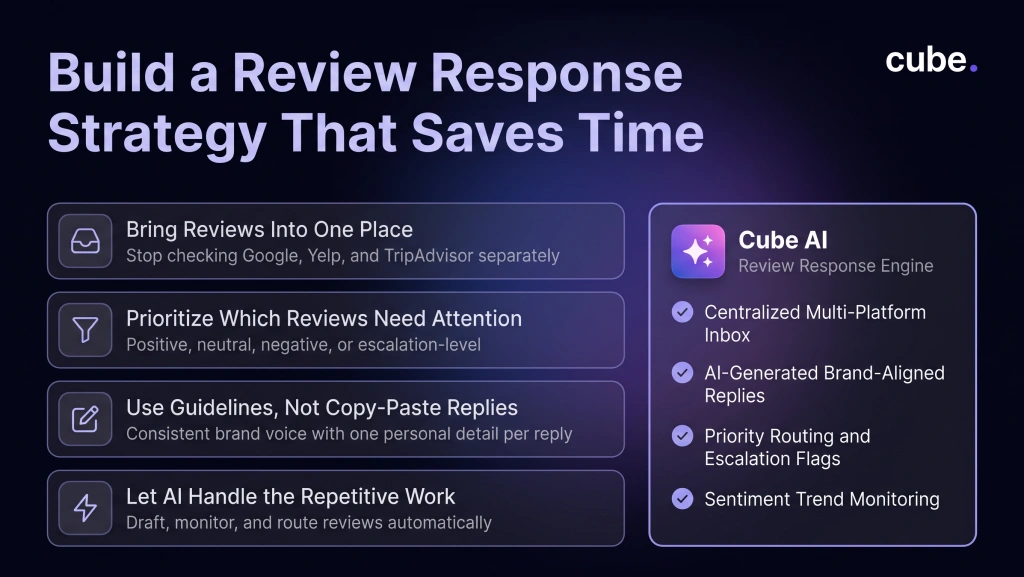
If your current process is “respond when someone gets a chance,” reviews will always compete with more urgent work.
A simple system can make responding much easier.
Bring Your Reviews Into One Place
Start by reducing the number of platforms your team needs to check manually.
Instead of opening Google, Yelp, TripAdvisor, and other review sites one by one, use a centralized system where your team can see incoming feedback in one place.
This is especially useful for businesses with multiple locations. As the number of profiles grows, manually checking every platform becomes harder to manage.
Our guide to managing online reviews across multiple platforms explains how a centralized approach can make this process more consistent.
Decide Which Reviews Need Attention First
Not every review needs the same response.
You can make this easier by grouping reviews into simple categories:
- Positive and straightforward
- Neutral or question-based
- Negative but routine
- Sensitive or needing escalation
This helps your team quickly understand what needs immediate attention and what can be handled with a simpler response.
Create Guidelines Instead of Copy-Paste Replies
Templates can save time, but using the same response repeatedly can make your business sound impersonal.
A better approach is to create simple response guidelines.
Decide how your brand should sound, how long responses should be, when an apology is appropriate, which issues should be escalated, and how your team should sign off.
Then personalize each response with one detail from the customer’s review.
This helps you get consistency without making every reply sound identical.
Let AI Handle the Repetitive Work
AI can make review management faster by handling the first part of the process.
For example, an AI-powered system can monitor incoming reviews, understand whether the feedback is positive or negative, and create a response based on your brand voice.
Your team can then spend more time reviewing sensitive situations instead of writing every reply from scratch.
Cube’s AI-powered Review Management solution brings reviews into one centralized inbox, generates personalized brand-aligned responses, tracks sentiment, and helps surface issues that need attention.
Use Reviews to Improve Search Visibility and Customer Experience
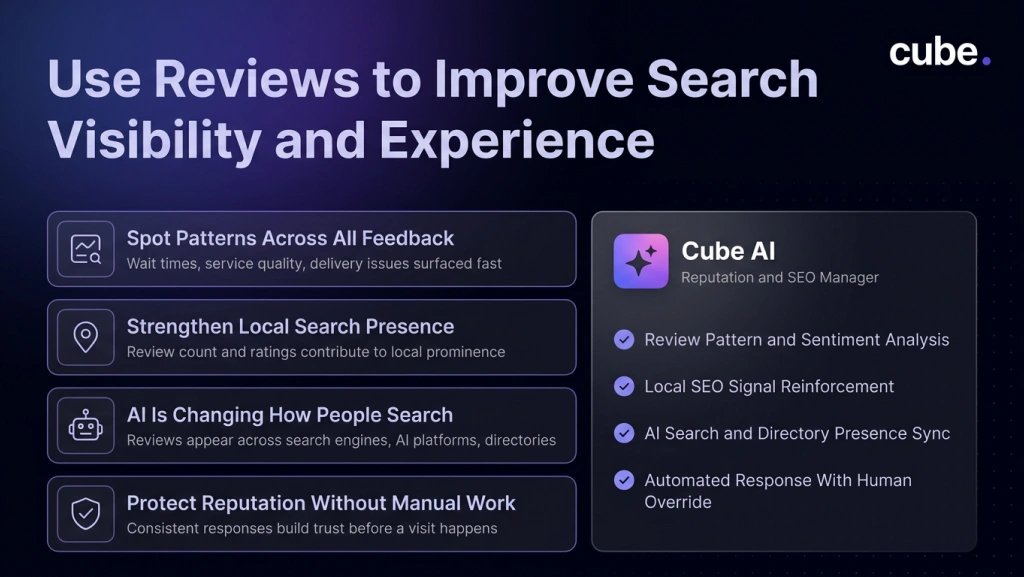
Responding quickly solves the immediate problem, but customer reviews can also tell you what is happening across your business.
If customers repeatedly mention long wait times, confusing instructions, delayed deliveries, or excellent service, those patterns can help you see where something needs attention or where your team is doing particularly well.
Reviews also strengthen the information people find about your business outside your website. That matters as AI changes the way people search and discover local brands across search engines, AI platforms, directories, and business profiles.
FAQs
Should Every Customer Review Receive a Response?
Your business should have a consistent process for acknowledging reviews, but the response does not need to be long.
Can AI Respond to Negative Reviews?
AI can draft a response, but sensitive complaints should have clear human escalation rules.
How Quickly Should Businesses Respond to Customer Reviews?
Ideally, businesses should respond as soon as possible, especially to negative reviews or customer questions that need attention.
Can Review Management Help Improve Local SEO?
Yes, consistent review monitoring and responses can support your local SEO efforts by improving customer trust and strengthening your online presence.
Respond Faster Without Adding More Work to Your Day
Good review management should not depend on someone remembering to check five different platforms between meetings.
The right system can help you bring reviews into one place, respond consistently, and quickly identify the feedback that deserves human attention.
Explore Cube’s AI-powered Review Management solution to see how you can centralize customer reviews, generate brand-aligned responses, track sentiment trends, and protect your reputation without adding another manual task to your team’s day.


