A homeowner with a leaking water heater or an overgrown yard does not spend days researching. They look for a nearby provider, compare a few options, and reach out within minutes. For residential service businesses across the U.S., such as HVAC, plumbing, cleaning, roofing, and landscaping companies, the challenge is showing up at the exact moment with an offer worth acting on.
Meta ads, running across Facebook and Instagram, are one of the most direct ways to do that. The platform pairs enormous local reach with targeting precise enough to put your service in front of homeowners in specific neighborhoods rather than the entire country.
This blog covers why Meta works for local lead generation, how to structure campaigns to attract qualified leads, and the mistakes that quietly drain the budget along the way.
Why Meta Ads Work for Local Service Businesses
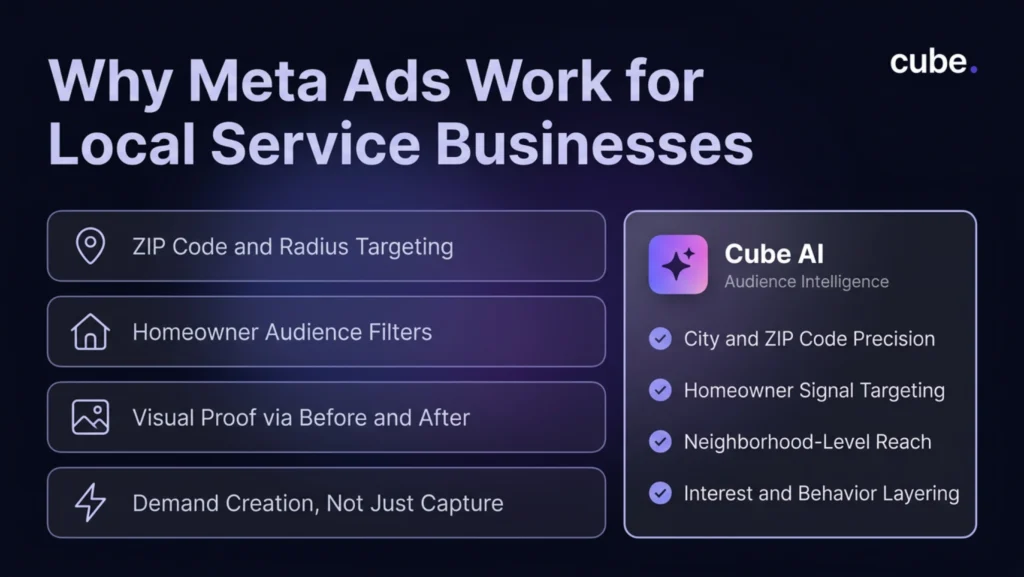
Most local service businesses don’t need to reach everyone. They need to reach the right people in the right neighborhoods at the right time.
Meta’s ad system lets you narrow that audience down to the people who matter. You can target by city, ZIP code, or a radius around your business address, then layer on age, homeownership, and interest signals. A roofing company can show ads only to homeowners within 25 miles. A pool cleaning service can focus on the neighborhoods where pools are common. In the U.S., Facebook and Instagram remain among the most widely used apps, so the potential audience for a local campaign is deep in almost every market.
Visual proof is one of the biggest advantages of Meta Ads for service businesses. A homeowner who was not actively searching scrolls past a before-and-after photo of a clean driveway or a freshly cut lawn and remembers you when the need arises. When done well, paid ads create demand rather than just capturing it.
How to Set Up Meta Ads for Local Lead Generation
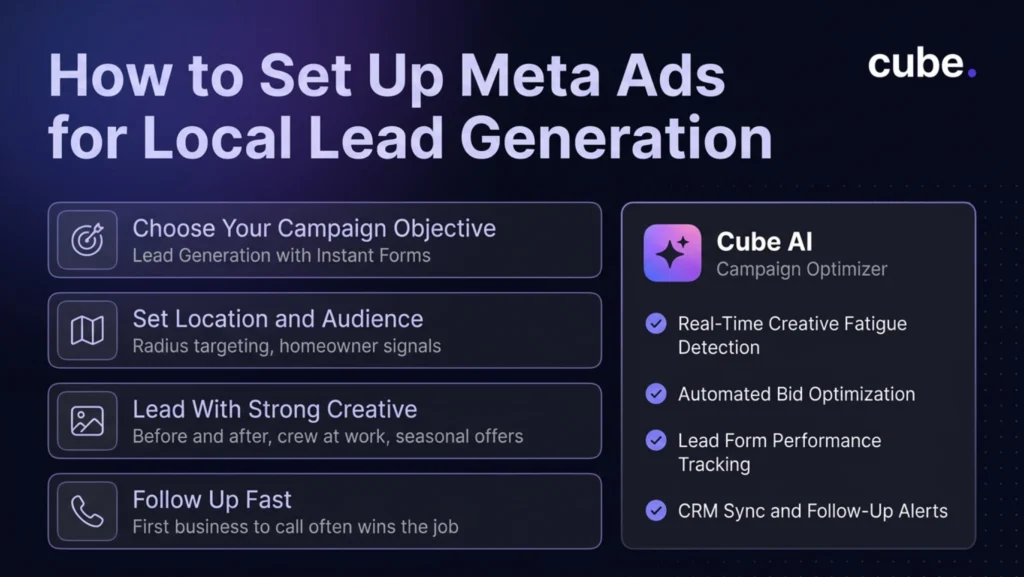
The following steps cover the structure that consistently produces qualified local leads rather than cheap, low-intent clicks.
Choose the Right Campaign Objective
Meta is built to help businesses turn interest into inquiries with as little friction as possible. Paired with Instant Forms, it lets a homeowner request a quote without leaving the app, with their name, email, and phone number prefilled. Fewer steps means more completed forms. For higher-ticket jobs, sending traffic to a dedicated landing page with a quote request can qualify leads more tightly.
Nail Your Location and Audience Targeting
Set your location to the exact area you serve. A radius around your address works well for businesses that travel to the customer. Avoid going too broad, since a lead 60 miles outside your service zone costs the same as one next door but cannot convert. Choosing where your budget goes is half the battle, and picking the right platforms and settings directly affects your cost per lead.
Lead With Strong Creative
Homeowners respond to proof. Before-and-after images, short clips of your crew at work, and clear pricing or seasonal offers outperform generic stock photos. Refresh your creative on a regular schedule, because the same ad shown too long stops working. Cube AI spots creative fatigue in real time so campaigns keep performing instead of quietly declining.
Follow Up Fast
A Meta lead is only as valuable as your response time. Service leads go cold quickly, and the first business to call often wins the job. Connect your lead forms to your CRM or phone so no request sits unanswered.
Getting More From Your Ad Budget
Most wasted spend on local campaigns comes from broad targeting, slow follow-up, and tired ads left running too long. AI-driven optimization can reduce ad spend waste by automatically improving targeting and bidding. As you grow, the goal is to increase your budget without watching your cost per lead climb, and there are proven ways to scale Facebook and Google ads while keeping costs in check.
Paid ads also work best alongside your other channels. Strong reviews make your ads more believable, and consistent review management gives prospects a reason to trust you before they ever pick up the phone. A homeowner who sees your ad and then finds dozens of positive reviews is far more likely to convert.
FAQs
How much should a residential service business spend on Meta ads?
Start with a budget you can sustain for several weeks, often a few hundred dollars per month, then scale once you understand your cost per lead and return on ad spend. Consistency typically delivers better results than a short-term spike in spending. If you’re unsure where to start, book a demo with Cube to get a customized advertising strategy and budget recommendation for your service area and goals.
Are Facebook or Instagram better for service business leads?
Both run through Meta, so you can use them together. Facebook often reaches older homeowners while Instagram skews younger, so let performance data guide your split.
What is the best Meta ad format for local leads?
Lead ads with Instant Forms usually produce the most leads, since homeowners submit details without leaving the app. Test them against landing page traffic for higher-value jobs.
How do I target the right customers with Meta ads?
Meta’s targeting tools let you reach people based on location, demographics, interests, and behaviors. Cube helps businesses refine audience targeting to focus on the homeowners and customers most likely to convert.
Drive More Local Leads With Cube
Meta ads reward businesses that target tightly, follow up fast, and keep their creative fresh. Doing all of that consistently while running a service business is the hard part.
Cube brings paid ads, SEO, review management, social, and email together on one platform, with AI agents handling campaign optimization and human strategists keeping everything aligned with your goals.
If you want a steady flow of local leads, book a demo with Cube and see what AI-powered advertising can do for your service business.