


In hospitality, reputation travels faster than any ad campaign. A single weekend can produce dozens of reviews across Google, TripAdvisor, Yelp, and booking sites, and each one shapes how the next guest sees you. Managing that flow is now a core part of running a hotel or restaurant, not an afterthought.
The businesses that handle reviews well turn feedback into trust, repeat guests, and higher rankings. The ones that ignore it watch small complaints harden into a reputation that costs them bookings.
This blog lays out the top strategies for managing online reviews in hospitality, from monitoring every platform to responding well and using guest feedback to improve.
Why Review Management Matters in Hospitality
Reviews are deeply embedded in how guests choose where to stay and eat. Research shows only 4% of consumers never read online reviews, and by the end of 2026, the average consumer was checking around six different review sites before deciding. For U.S. hotels and restaurants, that spread is the real challenge. Your reputation is not in one place. It is scattered across platforms, and guests cross-reference them before booking.
Good review management is not only about damage control. It directly supports visibility, since reviews and SEO are closely linked, and fresh, positive feedback helps you rank in local results.
Top Strategies for Managing Online Reviews
The strategies below help hospitality businesses stay on top of feedback across every platform guests use.
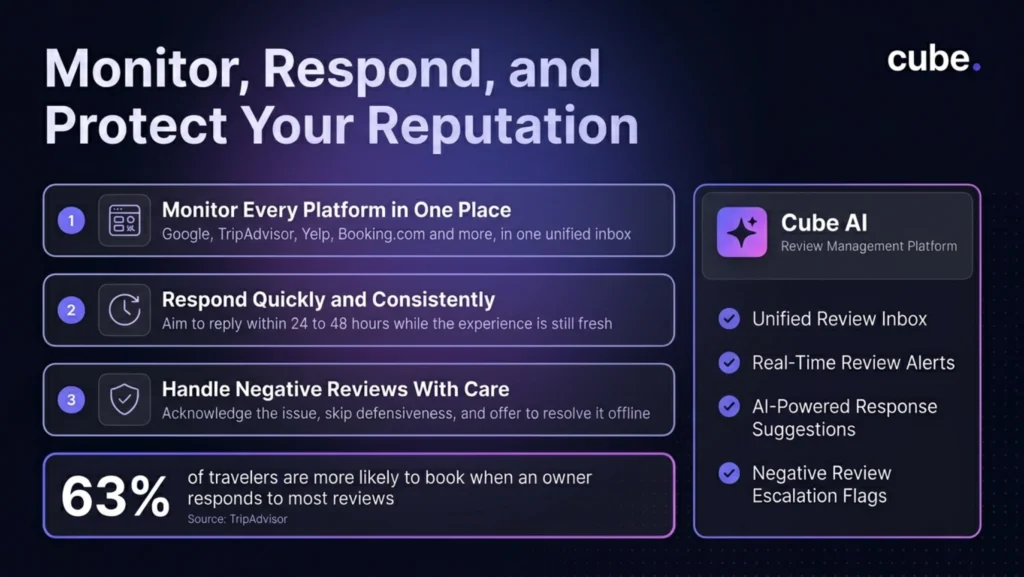
#1 Monitor Every Platform in One Place
Guests leave reviews wherever they booked or searched, so you need eyes on Google, TripAdvisor, Yelp, social media, and any booking platforms you use. Checking each one separately is slow and easy to neglect. A unified review management inbox pulls every review into one view so nothing slips through. Setting up alerts so new reviews reach you the moment they post turns review management from a weekly chore into something you handle in real time.
#2 Respond Quickly and Consistently
Speed signals that you are paying attention. Aim to respond within a day or two, while the experience is still fresh in the guest’s mind. TripAdvisor research found that 63% of travelers are more likely to book when an owner responds to most reviews, so every reply doubles as a quiet pitch to future guests.
#3 Handle Negative Reviews With Care
A negative review is not a crisis if you answer it well. Acknowledge the issue, skip the defensiveness, and offer to make it right offline. Future guests read these exchanges closely, and a calm, generous response often does more to protect your restaurant reputation than the complaint did to harm it. Responding fast also limits the damage, since an unanswered complaint sitting near the top of your profile speaks louder than one you have clearly addressed.
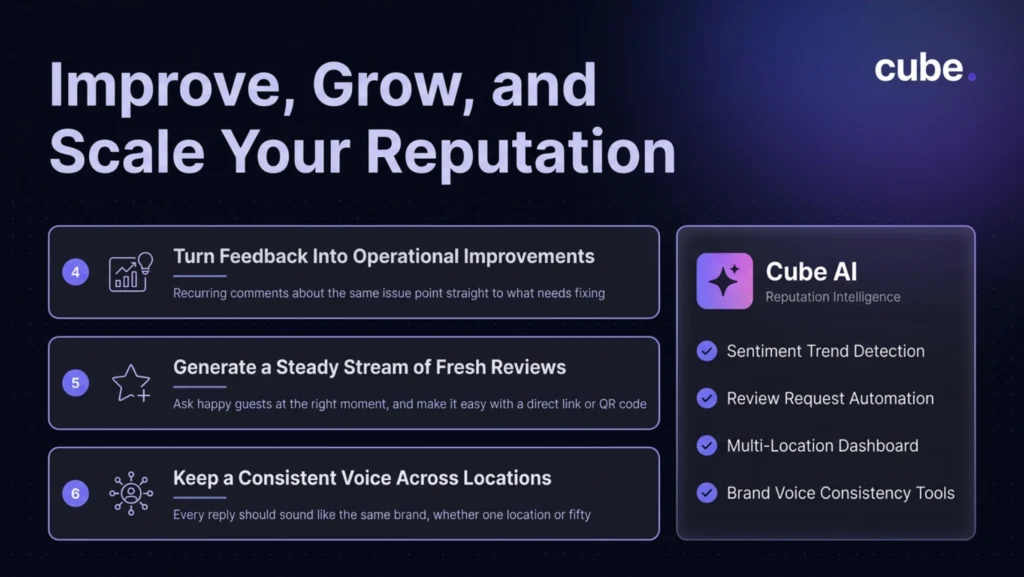
#4 Turn Feedback Into Operational Improvements
The best hotels and restaurants treat reviews as free research. Recurring comments about slow check-in, a noisy room, or a specific dish point straight to what needs fixing. If three guests in a month mention the same cold breakfast or long wait, that is a pattern worth acting on, not a one-off to brush aside. Building a simple customer feedback strategy around these patterns and using AI to spot trends across reviews makes it easier to act on hundreds of comments instead of reacting to them one at a time.
#5 Generate a Steady Stream of Fresh Reviews
Recency matters to guests, who trust recent feedback far more than older posts. Ask happy guests to leave a review at the right moment, after a great meal or at checkout, and make it easy with a direct link or QR code. A consistent flow of new reviews keeps your profile current and your rating strong.
#6 Keep a Consistent Voice Across Locations
For hotel groups and restaurants with multiple locations, every reply should still sound like the same brand. A clear, friendly tone applied consistently across properties builds recognition and trust, even when different managers handle the day-to-day responses. This is where a shared process and AI assistance help most, holding response quality steady as review volume grows across multiple sites.
Reviews also reinforce your presence in local search, and pairing them with active social media gives guests even more proof before they book.
FAQs
How can multi-location hospitality brands manage reviews efficiently?
A centralized platform like Cube helps hospitality brands manage reviews across all properties and review sites from one dashboard. This simplifies monitoring, streamlines responses, and provides portfolio-wide visibility without switching between multiple platforms.
How should I respond to a negative hotel or restaurant review?
Stay calm, acknowledge the issue, avoid excuses, and offer to resolve it offline. Future guests judge you on the response as much as the complaint.
How many review platforms should I monitor?
Monitor every platform your guests actively use, including Google, TripAdvisor, Yelp, Booking.com, Expedia, Airbnb, and others relevant to your business. A platform like Cube helps consolidate reviews from multiple sources into one dashboard, making it easier to manage guest feedback without switching between platforms.
Can review management improve local SEO?
Yes. Consistently collecting and responding to reviews signals active business engagement to platforms like Google. Strong review activity can improve Google Business Profile performance, strengthen local search visibility, and help hospitality businesses attract more guests through local search results.
Take Control of Your Reviews With Cube
Managing guest reviews across Google, TripAdvisor, Booking.com, Expedia, Airbnb, Yelp, and other platforms can quickly become overwhelming, especially for growing hospitality brands with multiple locations.
Cube brings all your reviews into one centralized dashboard, making it easy to monitor guest feedback, respond consistently, track sentiment trends, and manage your online reputation from a single place. AI-powered response suggestions help teams save time while maintaining a consistent brand voice across every property and platform.
Whether you’re managing one location or an entire portfolio, Cube helps you stay on top of every review, strengthen guest trust, and build a reputation that drives more bookings.
Book a demo to see how Cube simplifies hospitality review management.


