When brands plan social media ads, the instinct is to ask which platform is best. The more useful question is which platform delivers the best return on investment for your specific goals, because Instagram, Facebook, and TikTok each win for very different reasons.
All three operate at enormous scale, so reach alone is no longer the deciding factor. Global social media ad spend reached roughly $276 billion in 2025, and by some estimates Facebook and Instagram alone capture around 70% of that revenue. The platforms are not interchangeable, and the right choice depends on who you sell to and what you sell.
This blog compares Instagram, Facebook, and TikTok across audience, cost, and ROI to help you decide where to allocate your paid marketing budget in 2026.
The State of Social Media Ads in 2026
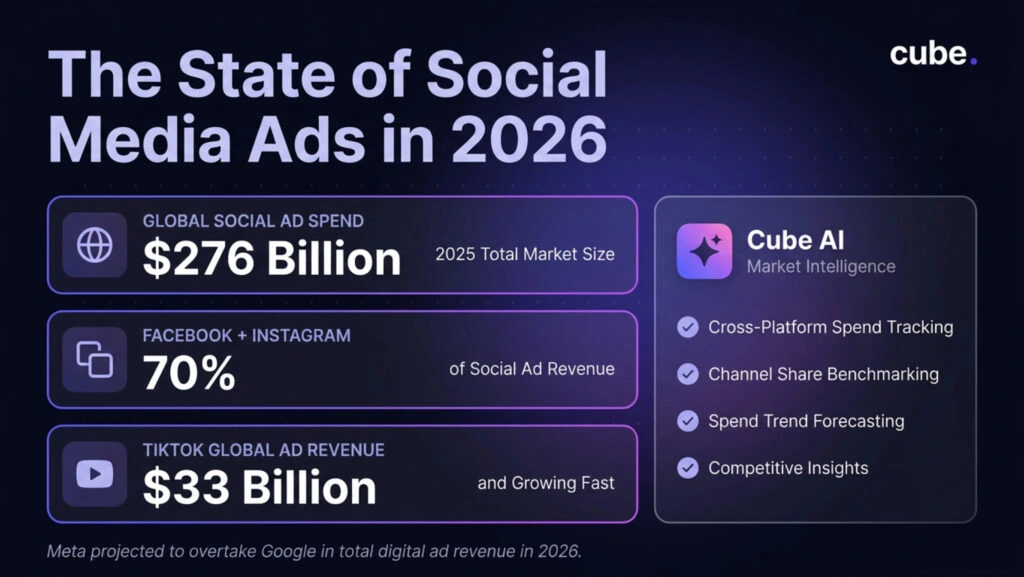
Meta dominates the category. The company surpassed $200 billion in annual revenue for the first time in 2025, with advertising accounting for roughly 97% of that total. EMARKETER projects Meta will overtake Google in total digital ad revenue in 2026, a milestone driven largely by Facebook and Instagram.
TikTok has become a serious competitor, with global ad revenue estimated at around $33 billion, though ongoing regulatory and ownership uncertainty in the US adds planning risk. As all three platforms reach billions of users, success is less about scale and more about fit. The platform whose audience, format, and intent match your offering will yield the highest return.
Facebook: Broadest Reach and Strong Retargeting
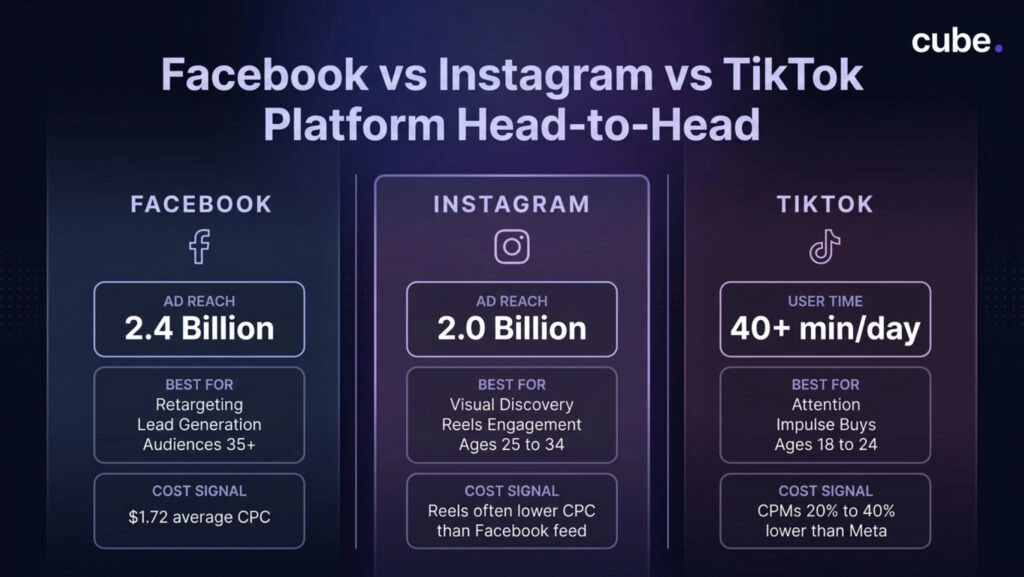
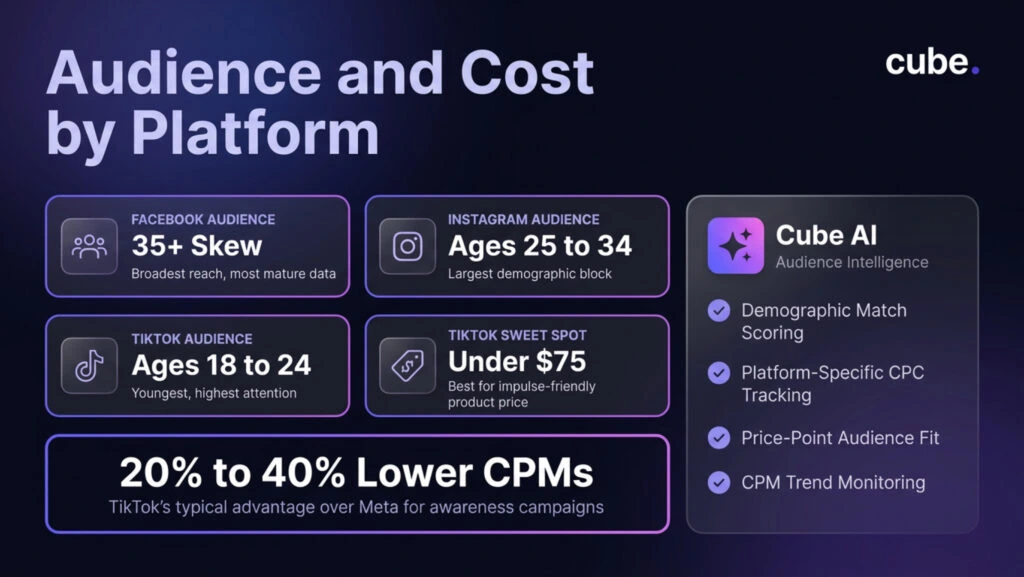
Facebook offers the widest and most diverse audience of the three, with advertising reach of roughly 2.4 billion people. Its users skew older than those on Instagram or TikTok, making it the strongest choice for reaching audiences aged 35 and up.
Where Facebook delivers ROI is direct response: retargeting, lead generation, local advertising, and offers aimed at a broad or older demographic. Its mature data and ad tools make it reliable, though rising competition has pushed the average cost per click to around $1.72 in 2026. For many businesses, Facebook remains the most dependable conversion engine.
Instagram: Visual Discovery and Product Sales
Instagram reaches roughly two billion people, with its largest audience aged 25 to 34. Its defining strength is product discovery: more than half of users say they discover new products on the platform, making it a powerful top-of-funnel channel for consumer brands.
For visually driven categories such as fashion, beauty, fitness, and home, Instagram often produces strong returns, particularly through Reels. As Instagram runs on the same Meta ad system as Facebook, you can manage both together, and Instagram Reels frequently carries a lower cost per click than the Facebook feed. It is the natural home for brands that sell through imagery.
TikTok: Attention, Virality, and Younger Audiences
TikTok skews younger than the other two, with its largest age group between 25 and 34, and it commands more attention than any rival. US users spend well over 40 minutes a day in the app, more than double the typical Instagram user, which gives creatives real room to convert.
TikTok’s CPMs are typically 20% to 40% lower than Meta’s for awareness, making it efficient for reach. It performs best for impulse-friendly products under about $75 and for categories like beauty and personal care, where native, creator-style video drives discovery. The trade-offs are a younger audience that may not suit every offer and the regulatory uncertainty around its US future.
Which Platform Delivers the Best ROI?
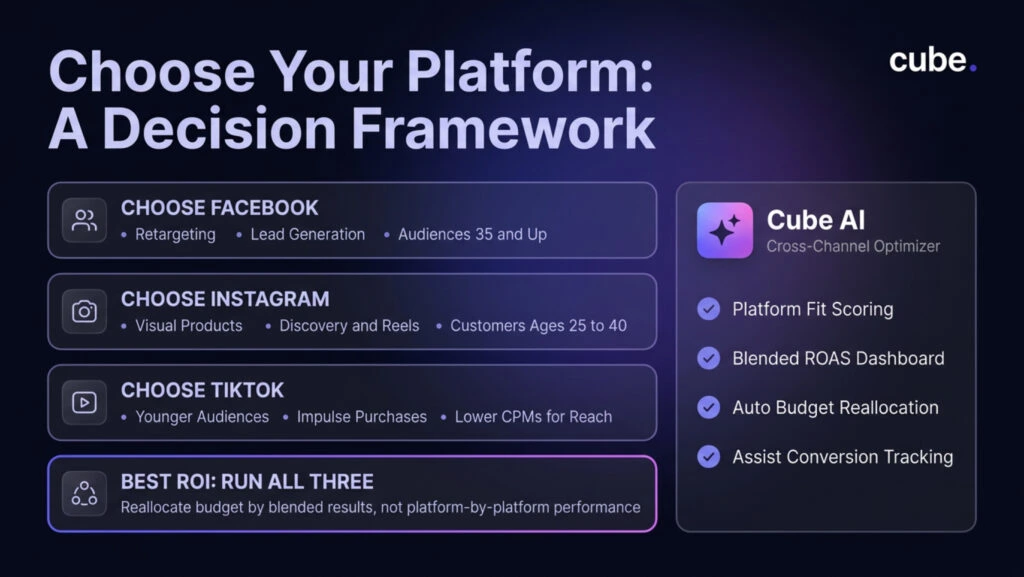
There is no universal winner; the best platform is the one that matches your objective, audience, product, and margins. As a starting framework:
- Choose Facebook for retargeting, lead generation, and broad or older audiences.
- Choose Instagram for visual products, discovery, and customers aged 25 to 40.
- Choose TikTok for younger audiences, impulse purchases, and brand attention at lower CPMs.
In practice, the highest-ROI approach is rarely to pick just one. These platforms work together, social ads often assist conversions that close elsewhere, and the smartest move is to run them in parallel and shift budget toward whichever delivers the best measured return. Judge performance on blended results, not platform by platform.
FAQs
Which platform has the best ROI: Instagram, Facebook, or TikTok?
There is no single winner. Facebook leads in retargeting, Instagram in visual product discovery, and TikTok in younger, impulse-driven audiences. ROI depends on your goals.
In 2026, should brands prioritize TikTok or Instagram for paid campaigns?
TikTok wins on reach and attention with younger audiences at lower CPMs, while Instagram tends to convert higher-intent shoppers for visual products.
Are Facebook and Instagram ads the same?
They run on the same Meta ad system but reach different audiences. Instagram skews younger and more visual; Facebook is broader and older.
How much do social media ads cost in 2026?
Costs vary by industry and targeting. TikTok offers the lowest CPMs for reach, while Facebook’s average cost per click sits around $1.72 and Instagram Reels often cost less per click than the Facebook feed.
Should I advertise on one platform or all three?
Most brands get the best ROI running all three and reallocating budget toward top performers based on measured results.
Get More from Social Media Ads with Cube
Running Instagram, Facebook, and TikTok campaigns effectively and knowing which platform delivers the highest return is what separates profitable social media advertising from wasted spend.
Cube helps you manage, track, and optimize all your social media ad campaigns in one place, ensuring every dollar works harder.
Book a demo with Cube to see how to maximize ROI on your social ad budget.